Testing Stonecap3.0.34 Software: Complete Guide to Effective Software Quality Assurance
Testing stonecap3.0.34 software is crucial for organizations aiming to maintain efficiency, reliability, and security in today’s fast-paced digital environment. In an era where software underpins almost every industry, ensuring that applications function as intended has become more than just a technical necessity—it is a strategic imperative. Particularly in the United States, companies are investing heavily in robust software testing methodologies to gain competitive advantages and safeguard sensitive data.
Software development has evolved dramatically over the past few decades. Once primarily a linear process, modern development now relies on agile methodologies, continuous integration, and rapid deployment cycles. This evolution has increased the complexity of software systems, making rigorous testing practices indispensable. Testing stonecap3.0.34 software is one such practice that exemplifies how modern tools and methodologies can streamline the process of quality assurance while minimizing errors and maximizing user satisfaction.
Understanding the Importance of Software Testing
At its core, software testing is the systematic evaluation of a software application to ensure it meets specified requirements. This process identifies bugs, performance bottlenecks, and security vulnerabilities, ensuring that the end product functions correctly across different environments and user scenarios.
The significance of testing cannot be overstated. According to industry research, the cost of fixing a defect escalates dramatically the later it is detected in the software lifecycle. Early detection through comprehensive testing reduces both financial burden and operational disruptions. Organizations implementing testing stonecap3.0.34 software often see substantial improvements in product stability and customer trust.
Furthermore, testing provides critical insights into software usability. User experience is a cornerstone of product success, and identifying usability issues before release ensures higher adoption rates and greater satisfaction. Beyond functionality, testing stonecap3.0.34 software evaluates the software’s resilience under stress, its integration with other systems, and its compliance with industry standards and regulations.
Types of Software Testing
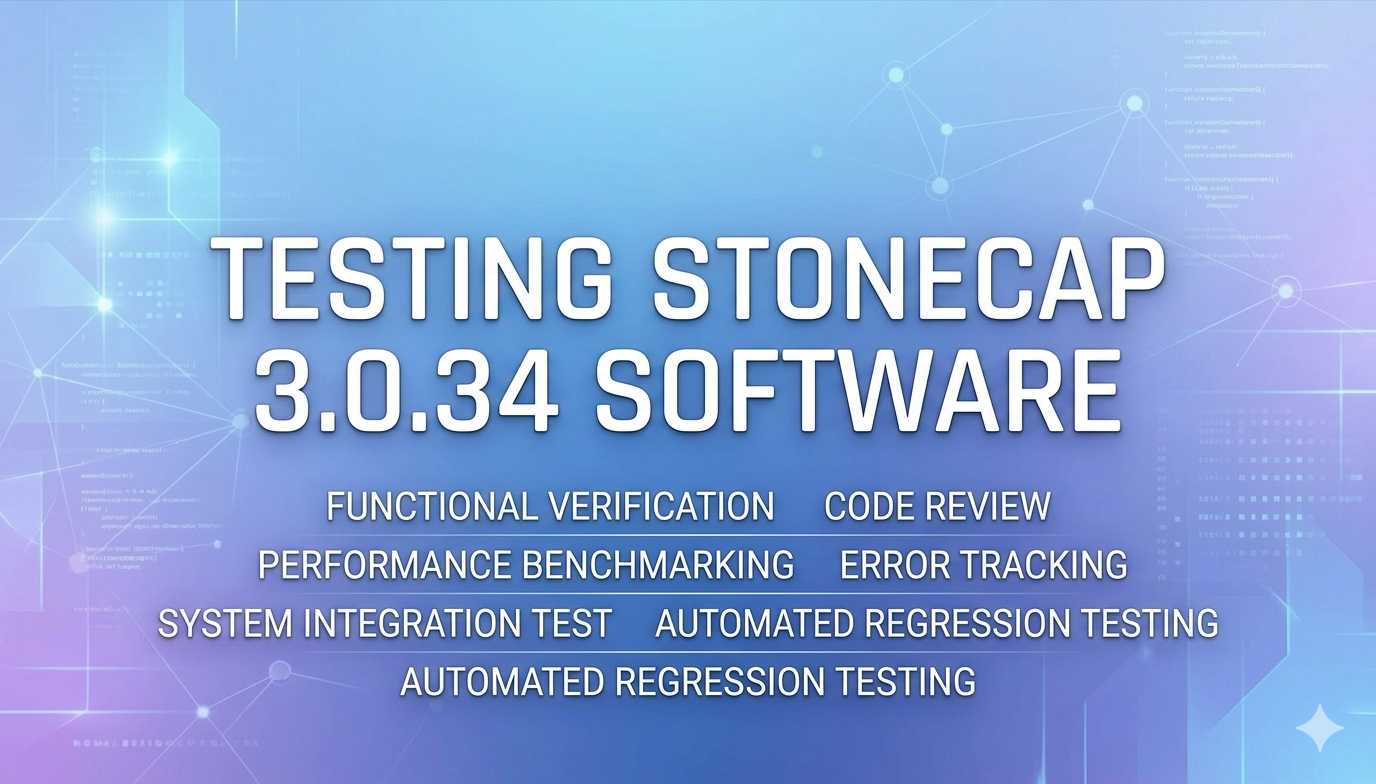
Testing stonecap3.0.34 software involves a wide spectrum of testing types, each serving a distinct purpose. Broadly, these can be categorized into functional and non-functional testing.
Functional Testing
Functional testing assesses whether the software behaves according to its specified requirements. This category includes:
- Unit Testing: Focuses on individual components or modules to verify their correctness.
- Integration Testing: Ensures that different modules interact seamlessly.
- System Testing: Evaluates the complete system’s behavior against requirements.
- Acceptance Testing: Determines if the software meets the needs of end-users or stakeholders.
Functional testing is essential for validating the core operations of software. Testing stonecap3.0.34 software at this stage guarantees that each feature functions as intended, reducing the likelihood of post-deployment issues.
Non-Functional Testing
Non-functional testing examines the software’s performance attributes rather than specific behaviors. Key categories include:
- Performance Testing: Measures responsiveness, throughput, and scalability under various workloads.
- Security Testing: Identifies vulnerabilities to prevent data breaches and cyberattacks.
- Usability Testing: Evaluates the software’s ease of use from the end-user perspective.
- Compatibility Testing: Ensures proper operation across different devices, browsers, and operating systems.
By incorporating non-functional testing into the development lifecycle, organizations can deliver robust, secure, and high-performing software. Testing stonecap3.0.34 software combines both functional and non-functional aspects, creating a holistic approach to quality assurance.
Automated vs. Manual Testing
A crucial consideration in modern software testing is choosing between manual and automated approaches. Each has distinct advantages and limitations.
Manual Testing
Manual testing relies on human testers to execute test cases and verify outcomes. It is particularly effective for exploratory testing, usability evaluation, and cases requiring human judgment. However, manual testing can be time-consuming and prone to human error, especially in large, complex systems.
Automated Testing
Automated testing leverages scripts and tools to execute test cases without manual intervention. It excels in repetitive tasks, regression testing, and high-volume scenarios. Automation reduces testing cycles, ensures consistency, and allows teams to focus on higher-level tasks.
Testing stonecap3.0.34 software often incorporates both manual and automated strategies, providing a balanced approach that maximizes efficiency and accuracy. The choice between manual and automated testing depends on project requirements, budget, and timeline constraints.
Best Practices for Effective Software Testing
Implementing a structured approach to software testing is critical for achieving optimal outcomes. The following best practices can enhance the effectiveness of testing stonecap3.0.34 software:
- Early Involvement: Integrate testing into the earliest stages of software development to catch defects before they escalate.
- Comprehensive Test Coverage: Ensure all functionalities, edge cases, and critical paths are tested.
- Continuous Testing: Adopt continuous integration and continuous delivery (CI/CD) pipelines for ongoing testing throughout development.
- Use of Realistic Data: Test with data that closely mimics real-world scenarios for accurate results.
- Regular Review and Feedback: Involve developers, testers, and stakeholders in reviewing test outcomes to refine testing strategies.
- Prioritize Critical Modules: Focus testing efforts on modules with the highest impact on overall functionality and user experience.
Organizations that adopt these practices while testing stonecap3.0.34 software often report fewer post-release defects, faster development cycles, and improved product reliability.
Common Challenges in Software Testing
Despite its importance, software testing faces several challenges. Understanding these hurdles can help organizations mitigate risks and improve testing efficiency.
- Complex Systems: Modern software often integrates multiple services, APIs, and platforms, complicating testing efforts.
- Rapid Development Cycles: Agile methodologies and continuous deployment demand faster testing without compromising quality.
- Resource Constraints: Skilled testers, infrastructure, and tools may be limited, affecting test coverage and effectiveness.
- Changing Requirements: Dynamic business needs can lead to frequent requirement changes, requiring continuous adjustment of test plans.
- Integration Issues: Testing software that interacts with third-party systems can be unpredictable due to differences in implementation.
Testing stonecap3.0.34 software addresses these challenges by providing adaptable frameworks, automated tools, and structured methodologies that streamline the testing process even in complex environments.
Advanced Testing Techniques
Beyond conventional testing methods, advanced techniques are increasingly adopted to enhance software quality.
- AI-Driven Testing: Artificial intelligence algorithms can predict defect-prone areas, generate test cases, and even analyze test results automatically.
- Behavior-Driven Development (BDD): Combines testing with collaboration between developers, testers, and business analysts to ensure software meets business goals.
- Exploratory Testing: Encourages testers to investigate the software freely, uncovering unexpected issues that scripted testing may miss.
- Performance Simulation: Uses virtual environments to simulate peak loads, ensuring the software can handle real-world usage scenarios.
Testing stonecap3.0.34 software leverages these techniques to stay ahead of potential issues, ensuring higher reliability and a superior user experience.
Metrics and Reporting in Software Testing
To make testing efforts measurable and actionable, organizations track key performance metrics. These metrics provide insights into the quality of software, the effectiveness of testing strategies, and areas for improvement. Common metrics include:
- Defect Density: Number of defects per module or line of code.
- Test Coverage: Percentage of code or features tested.
- Mean Time to Detect (MTTD): Average time taken to identify defects.
- Mean Time to Repair (MTTR): Average time taken to fix defects.
- Customer-Reported Issues: Defects identified post-release by end-users.
Regular reporting and analysis allow teams to make data-driven decisions and continuously refine the testing process. Testing stonecap3.0.34 software emphasizes metric-driven insights, ensuring accountability and continuous improvement.
The Future of Software Testing
The landscape of software testing is constantly evolving. Emerging technologies, evolving user expectations, and increasing software complexity are shaping the future of quality assurance.
- Cloud-Based Testing: Facilitates scalable, flexible testing environments without heavy infrastructure investments.
- Shift-Left Testing: Encourages earlier testing in the development lifecycle to detect defects sooner.
- Continuous Testing in DevOps: Integrates testing seamlessly into the DevOps pipeline, ensuring faster and more reliable releases.
- Enhanced Security Testing: As cyber threats grow, testing for security vulnerabilities becomes a top priority.
Organizations that proactively adapt to these trends, particularly through frameworks like testing stonecap3.0.34 software, are better positioned to deliver high-quality, secure, and user-centric applications.

Conclusion
In today’s fast-paced digital era, robust software testing is essential for organizational success. From ensuring functional correctness to validating performance, usability, and security, testing provides the foundation for reliable, efficient, and user-friendly software.
Testing stonecap3.0.34 software exemplifies modern quality assurance practices, combining manual and automated approaches, leveraging advanced techniques, and incorporating metrics-driven insights. By integrating testing throughout the software lifecycle, organizations in the United States and globally can achieve reduced defect rates, faster time-to-market, and enhanced customer satisfaction.
Ultimately, the success of any software initiative depends not only on innovative features but also on the confidence that those features work as intended. Rigorous testing, structured methodologies, and continuous improvement form the backbone of this confidence. Organizations that invest in comprehensive software testing, particularly through specialized tools and approaches like testing stonecap3.0.34 software, gain a competitive edge in delivering high-quality solutions that meet and exceed user expectations.